How to make your panel event neuroinclusive for neurodivergent speakers
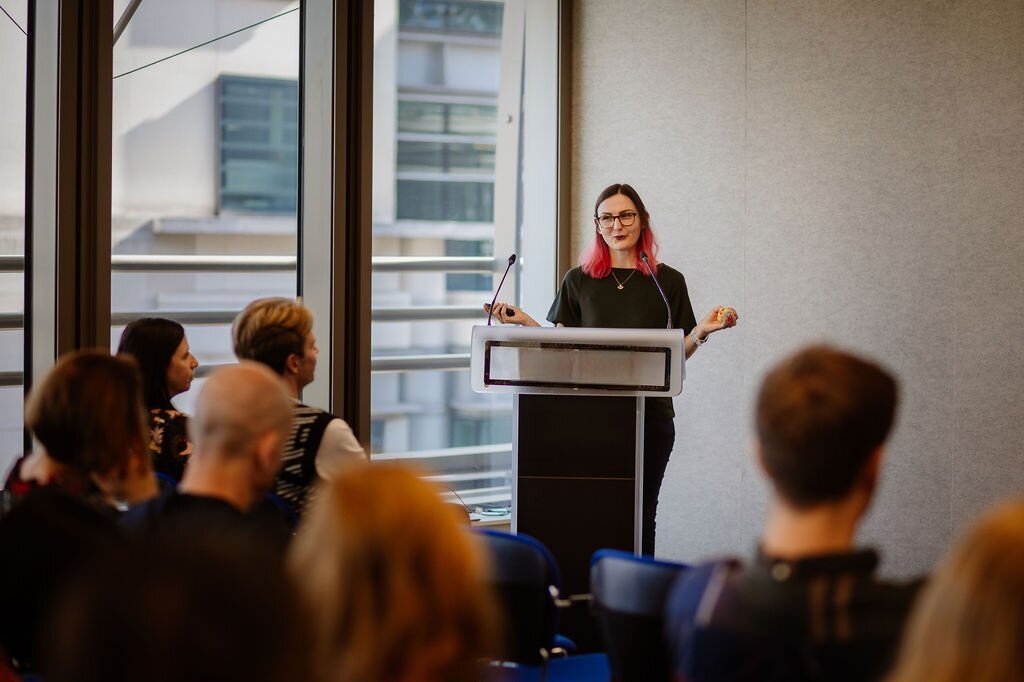
Alicja speaking at an event
Since I founded Expand the Circle in 2021, I’ve participated in many online and in-person neurodiversity-focused panel events. These have ranged from international conferences like Stanford Neurodiversity Summit to niche UK events such as Autscape and Bradford Literature Festival. My biggest learning from these sessions is what truly creates a positive experience for everyone involved.
Traditional panel setups often assume that all speakers process information in a similar way. This can unintentionally create barriers and unnecessary stress. In my experience, factors like unpredictable schedules, sensory overload or the expectation of quick-fire answers can make it challenging for neurodivergent speakers to fully contribute and “shine”.
Neuroinclusion means actively removing these barriers so that every speaker, regardless of their neurotype, can feel comfortable and contribute fully. Here are my top nine tips on how to make your next panel event neuroinclusive for neurodivergent speakers:
How to make your panel event neuroinclusive for speakers
✓ 2. Allow speakers to get to know each other
✓ 3. Agree on a speaking order
✓ 4. Define panel timings and response depth upfront
✓ 5. Agree on how to manage contributions
✓ 6. Share event logistics in advance
✓ 7. Allow for varying processing speeds
✓ 8. Offer a space to recharge and decompress
Before the event
1. Ask about speaker needs
Don’t try to guess what accommodations your neurodivergent speakers might need - just ask. Invite speakers to share any preferences or requirements, such as sensory sensitivities, communication styles or scheduling needs.
One helpful way to do this is by encouraging speakers to share an ‘access rider’ - a simple document common in creative industries, where they can outline their specific accessibility needs for the event.
You can also reach out before the panel event with open-ended questions such as:
👉 “Do you have any sensory sensitivities, communication styles, or access and scheduling needs?”
👉 “Do you have any preferences around lighting, sound, or breaks?”
Asking about needs and any adjustments signals your commitment to neuroinclusion. It also gives neurodivergent speakers an explicit permission to advocate for themselves, while also helping you plan more effectively.
2. Allow speakers to get to know each other
For an autistic person, like me, meeting other speakers including the moderator before the event will help create a mental image of the other panellists. As a result, it will help reduce uncertainty in the lead up to the event. It will also help create good “chemistry” for the group and make the event flow more naturally.
You can do this by giving your panel speakers an opportunity to meet beforehand, for example, at a technical check.
Alicja’s insight: I've experienced this several times now. There’s a marked difference in the “feeling” of a panel event when the speakers and moderator have met before hand versus only on event day. For me, forming a connection in advance makes me more comfortable, which then gets reflected in audience participation and feedback.
If meeting beforehand isn’t possible, circulating speaker bios containing photographs and social media or website links for speakers to learn about each other, is a good alternative.
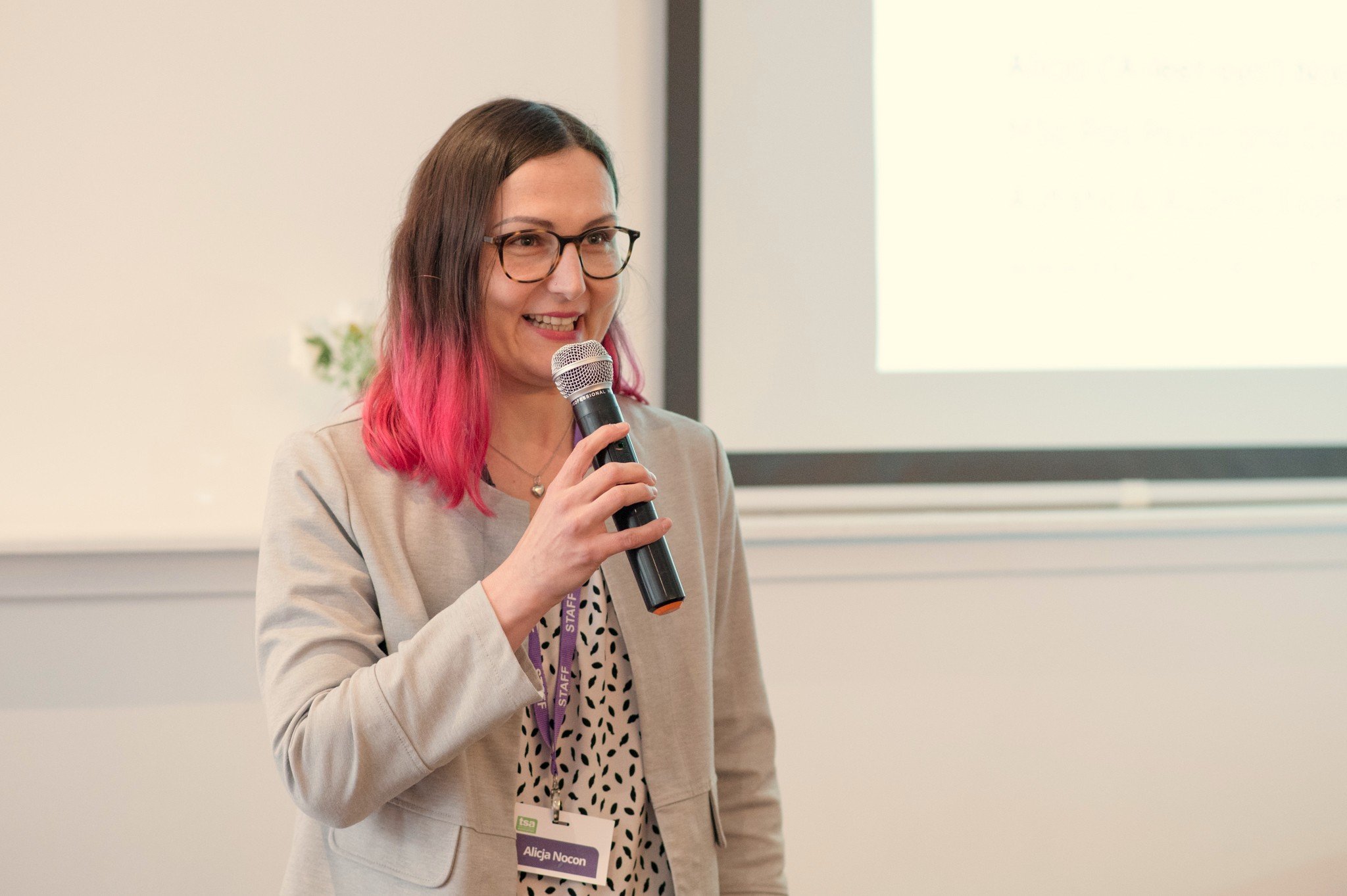
Alicja Nocon speaking at an event
3. Agree on a speaking order
Creating order for neurodivergent speakers in a panel event is helpful because it addresses specific needs around processing time, predictability, and communication style. For many neurodivergent adults, specifically those who are autistic or ADHDer, highly unstructured and unpredictable environments can lead to confusion, anxiety and difficulty expressing their full thoughts (sometimes to the point of ‘situational mutism’).
You can create order by setting out the panel order in advance. Keeping the same speaker order can be helpful as it creates a predictable pattern. It’s particularly helpful if there are several rounds of questions.
Alicja’s insight: Personally, I like being last or second to last “in the pecking order”, especially if the panel are asked to answer the same question. It gives me time to fully process and understand the question (see also tip number 7 below). Perhaps more importantly, it also allows me to build on other people's contributions and compare and contrasts points already made. I look for opportunities to relate to others speaker’s experiences and, where relevant, offer a different complementary perspective (if my experience is different) to broaden the conversation.
Equally, I know other neurodivergent speakers who prefer to be the first or second person to answer and voice their point while it’s still “fresh”. Generally, this works particularly well for speakers with poorer working memory, an experience that many dyslexics and ADHDers will resonate with (but of course it’s not a rule).
4. Define panel timings and response depth upfront
Agreeing on the panel format and expected timings upfront helps everyone know what to expect. It allows speakers to rehearse and prepare, reduces last-minute panic and ensures the event doesn’t go over time.
It’s good to:
👉 Be explicit about an estimated response time for each question. For example, are you looking for a short 2-minute or a longer 6-minute response?
👉 Define the depth: Would you like the speaker to share one idea or anecdote or are you looking for a longer, more-rounded contribution.
👉 Share questions early. Provide panel questions well in advance. This allows enough time to process the information and plan contributions.
Alicja’s insight: I often see the temptation to try and “squeeze” too many questions in a panel event - considering broad answer timings per speaker is a good check. Also, defining desired answers both in terms of time and scope can help ensure that all speakers have a chance to contribute something new - if the first speakers shares 5 distinct ideas, it can be hard to add value and build on that.
5. Agree on how to manage contributions
Explicitly planning for conversational transitions reduces the uncertainty and cognitive load of navigating unpredictable environments. Creating a structured but flexible space ensures all speakers can contribute without the stress of competing for airtime.
You can create a neuroinclusive space by:
👉 Agreeing not to interrupt to honour each person’s processing time and ensure quieter voices aren’t “drowned out”.
👉 Using a simple hand signal, such as a raised hand or the digital "raise hand" button, to show you have something to add without needing to "find a gap".
👉 Asking the moderator to "direct traffic" by acknowledging signals to contribute and explicitly naming who will speak next, for example: "I see [speaker 3] has a thought to add, we'll come back to her after [speaker 2] has finished".
Alicja’s insight: I was once "caught off-guard" on a virtual panel when a speaker jumped in while I paused during my contribution to formulate my next thought. Because it was unexpected, I felt confused and disorientated. While I eventually recovered, it was a clear example of how unexpected changes and a lack of agreed transitions can disrupt an autistic speaker’s flow.
6. Share event logistics in advance
Reducing the cognitive demand of having to navigate logistics allows speakers to focus on their contribution. Sharing specific event details in advance eliminates the stress of “things going wrong” and ensures everyone arrives at the right place with capacity to engage, whether that’s physically or virtually.
👉 Share these details well in advance:
▸ Event agenda, including broad timings for transitions and breaks
▸ Location, including physical address and directions or a joining link if online
▸ Venue layout for in-person events to help with navigation
▸ Technical setup and any required digital files or hardware
▸ Dress code to “fit in” (pun intended)
▸ Break expectations, including when and where to take them

Alicja speaking at Bradford Literary Festival’s panel event
During the event
7. Allow for varying processing speeds
Not everyone processes information at the same speed. Removing the pressure to respond "on the spot" creates a supportive environment where neurodivergent speakers can contribute without anxiety.
You can honour varying processing speeds by:
👉 Naming the speaker before asking the question to provide an extra verbal cue and reduce reliance on non-verbal signals.
👉 Normalising "pass" or "need more time" as valid responses to allow speakers to formulate better thought-out answers
👉 Allowing peers to step in if a speaker needs a moment, ensuring the conversation continues while they process the information
Alicja’s insight: I experienced this working really well at Autscape, a conference and retreat by and for autistic people. While on a panel, I got “stuck” on a question and needed a moment. Another autistic panellist noticed and asked: “Would you like more time to process? I can answer first and we'll come back to you”. Being offered grace and extra processing time made me feel respected and valued. It ensured the conversation flowed without making me feel pressured to perform.
8. Offer a space to recharge and decompress
Providing a quiet room or sensory break area is a simple and effective way to support neurodivergent speakers. Having access to a calm spot, away from noise and bright lights before and after the panel event helps manage energy levels and maintain focus and ease for the duration of the event.
👉 Designate a low-sensory space nearby with soft lighting and comfortable seating away from noise.
👉 Share the location and directions to provide reassurance and reduce the cognitive load of navigation.
Alicja’s insight: I find having a dedicated spot to "reset" my nervous system makes a massive difference to my energy levels. A great example is The Neu Project’s sensory pop-up space at Cannes, which set a new standard for neuroinclusion by offering a dedicated area for attendees to recharge at a high-profile event.
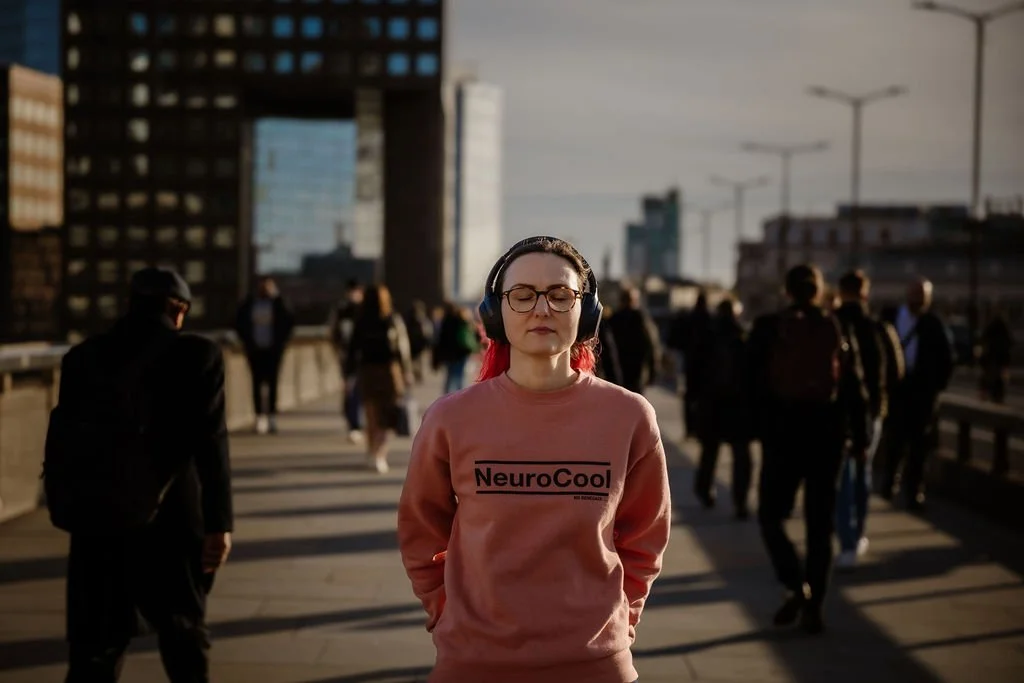
Alicja recharging
After the event
9. Collect feedback to improve future events
The conversation should not stop when the microphones are turned off. Gathering feedback from speakers and attendees is the only way to measure the impact of your accessibility efforts. It also shows that you “walk the talk”, which builds long-term trust.
👉 Ask targeted neuroinclusion-focused questions such as:
"Were the quiet zones clearly marked and accessible?"
"Did the speakers' pace of delivery allow you to follow the content comfortably?"
"Was the pre-event information accurate?"
👉 Offer multiple feedback formats. Use a mix of open-ended questions and quantitative scales (such as 1-5 or rating stars) and provide voice note and video feedback options for those who find typing a barrier.
👉 Respect the "processing gap". Wait 24 to 48 hours before sending surveys to allow time for reflection and recovery from social and sensory exhaustion.
👉 Ensure feedback can be submitted anonymously. Making names optional removes the pressure to "mask" or give polite, standard answers.
Alicja’s insight: If you implement a suggestion from a previous event, highlight it. Showing that you have listened builds trust and “moves the conversation” from awareness to acceptance and action.
Conclusion
Creating a neuroinclusive panel event does not require a complete overhaul. Instead, it is about being open to different perspectives and making thoughtful adjustments.
Sharing details early, setting clear expectations, and building in structure can help all speakers feel more comfortable and confident. When you allow plenty of preparation and processing time, you ensure that everyone, whether neurodivergent or not, can participate fully.
These suggested adjustments do more than just improve a single event. Applying these practices more broadly will also make your own organisation more neuroinclusive for your employees and clients alike.
Download a Neuroinclusive Panel Checklist to make your next panel event welcoming for every mind:
Looking for an engaging speaker who brings latest science insights, lived experience, and practical strategies around neurodiversity?
When you book me as a neurodiversity speaker, I’ll provide guidance to make your event confidently neuroinclusive.
Get in touch to book an engaging, inclusive voice for your next panel event.
About the Author:

Alicja Nocon is the founder of Expand the Circle. Her mission is to empower late-diagnosed neurodivergent adults to contribute in the workplace on their own terms and for it to make business sense.
Alicja offers coaching and mentoring for neurodivergent adults, specifically neurodivergent employees who identify with autism or ADHD. She also provides neurodiversity training for organisations and enjoys speaking at panels and other events.
Related topics: