
(5) Payment options
When submitting your claim, you’ll be able to specify who the claim should be paid to, with options to select yourself or someone else.
Who can receive the claimed amount?
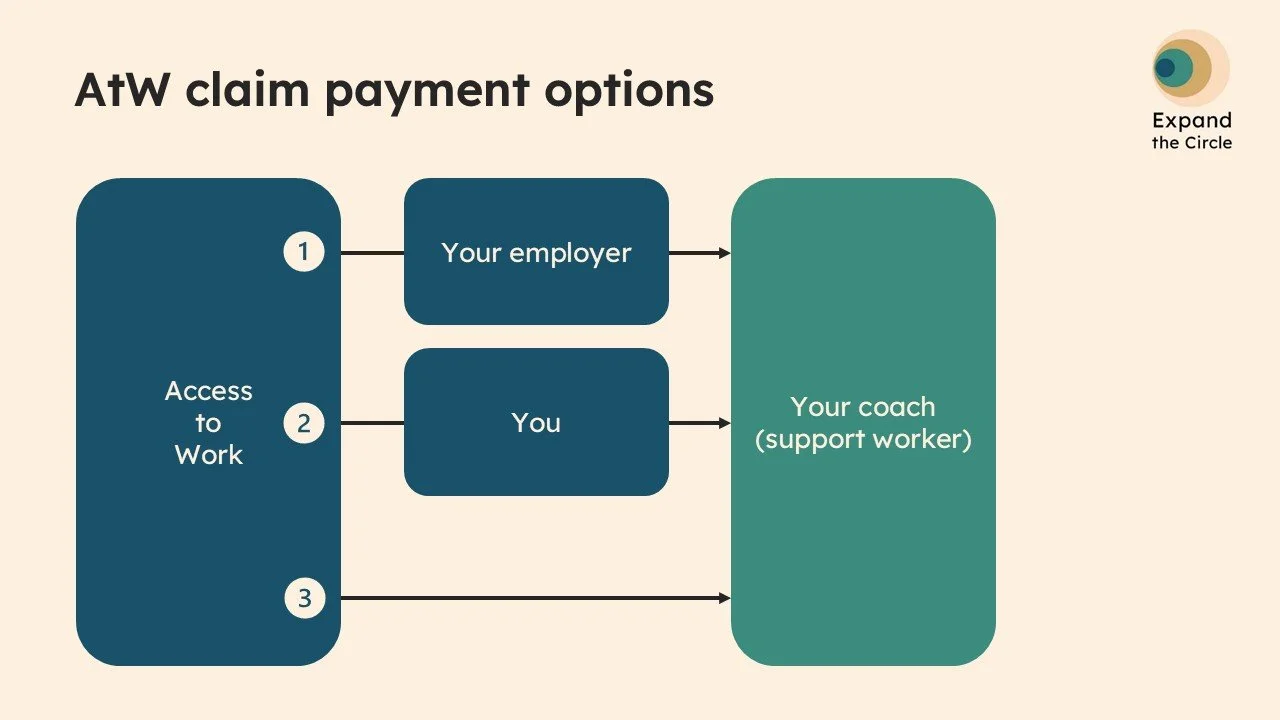
When making a claim, you can select who Access to Work (AtW) will pay. I have come across the following three options, with the payment made to:
Your employer (typically arranged via HR or in smaller organisations a line manager or a PA). The employer receives claim amount to their bank account, and then pays the coach.
You. You receive claim amount to your pack account and then pay the coach.
Directly to your coach (or using AtW language, your “support worker”).
This is shown visually below:
Practically, which claim payment option works best?
You pay your coach, AtW pays you
The most common and practical option when working with independent coaches like myself is for Access to Work to pay you directly (option 2 above). This has a number of advantages:
No need to remember and update your coach on when you’ve made the claim and when it’s been confirmed.
No session delays or emotional strain on the coaching partnership when there are payment details caused by Access to Work or issues when making claims.
Of course, a potential disadvantage here is that you’ll need to have money set aside to pay for the cost of coaching upfront. If money is an issue, you could always ask your coach to set up a payment plan or pay with a credit card to delay or spread the payment.
Note: As a coach, I will ask you to pay me for a block of 3 sessions in advance. The default payment method is a UK bank transfer (BACS), but I’m happy to accommodate a credit card so at no additional cost.
See the visual representation of the process below:
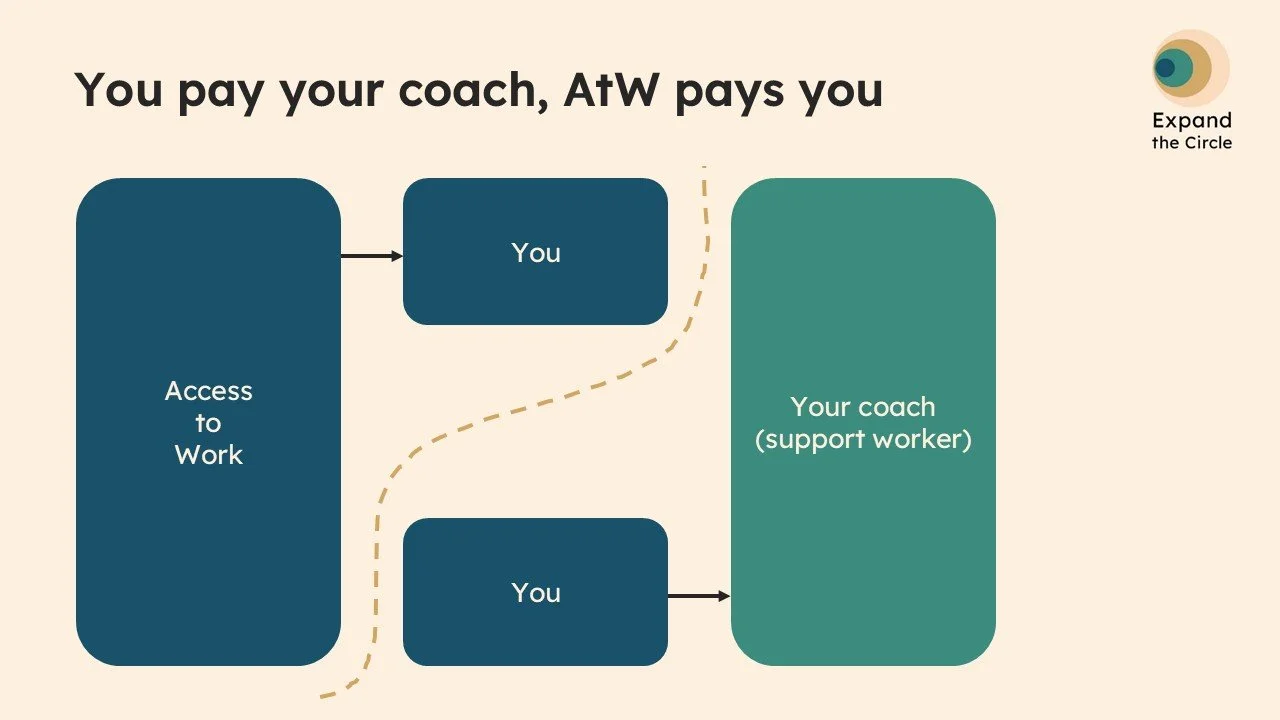
This shows that although two payments need to be made (AtW to you, you to your coach), there’s a clear separation between the two transactions and no need to keep the third party involved updated.
AtW pays the coach directly
Some coaches might be happy to arrange to receive payment from Access to Work directly (option 3). Whilst this might make most sense from the financial point of view, it introduces a number of disadvantages:
You still need to make a claim.
You now need to update your coach on when you’ve made the claim and when it’s been confirmed.
You also need to actually remember to update your coach on the status of the claim (as AtW won’t do it for you).
If you forget to update your coach (or procrastinate on it for the dread of having to deal with your emails), you will see your mailbox filling up with increasingly more frequent and less friendly reminders.
Your coach may also ask you for extra information that they would need otherwise in case they wish to ask AtW about the status of the claim themselves. This will include your AtW reference number, employer name, date of birth, which you may not wish to share.
Finally and perhaps more importantly, payment delays caused by incorrect claims or Access to Work delays WILL strain your relationship with your coach and may lead to sessions being temporarily paused. Consequently, this will reduce the value you will get out of the coaching process as a good working alliance and consistency of sessions is key to making the process work.
See the visual representation of the process below:
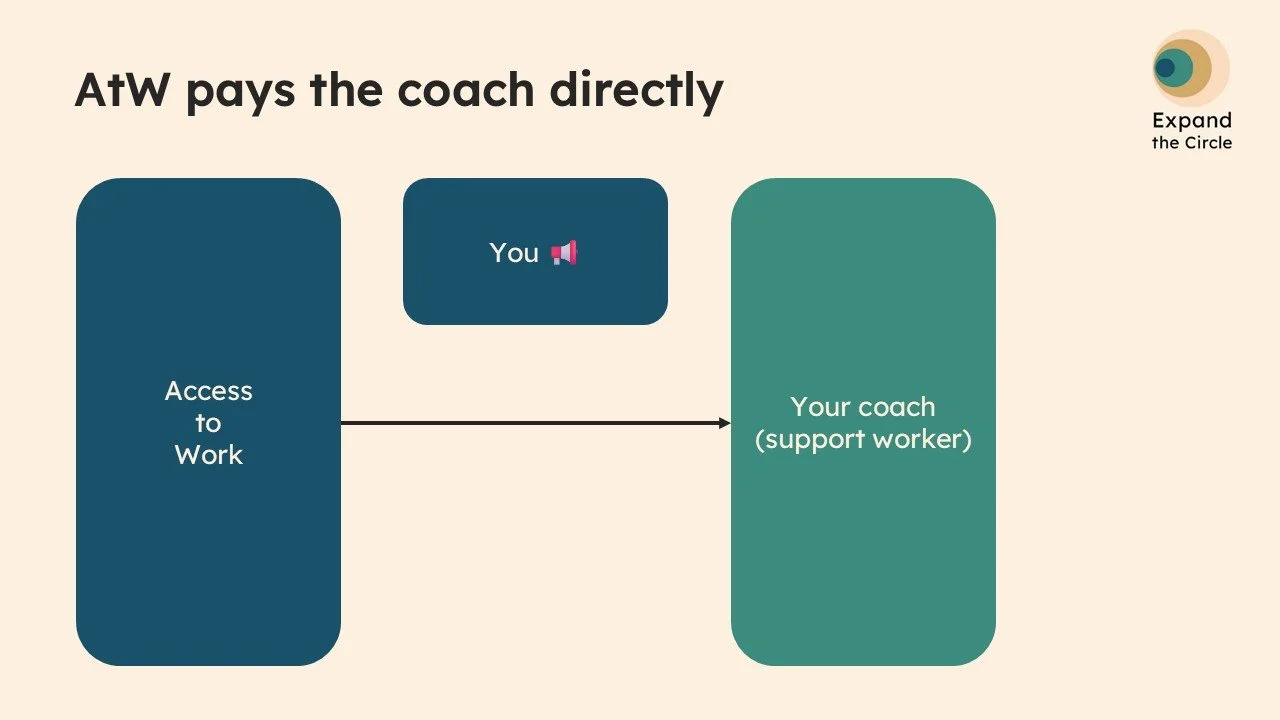
This shows that although only one payment is made (AtW to your coach), you need to act as a messenger between AtW and your coach and keep your coach informed of the claim status.
Your employer pays the coach
Whilst this option (option 1) is preferred by big coaching providers, independent coaches are unlikely to agree to it. This is because this option creates a lot of extra admin.
Bigger coaching providers who work with a small number of big employers with lots of coachees from the same organisation can cope with this extra administrative burden.
However, independent coach who support a large number of often smaller employers often work with only one coachee from any given organisation. Having to engage with an organisation’s contact for many different organisations would create an administrative headache.
See the visual representation of the process below:
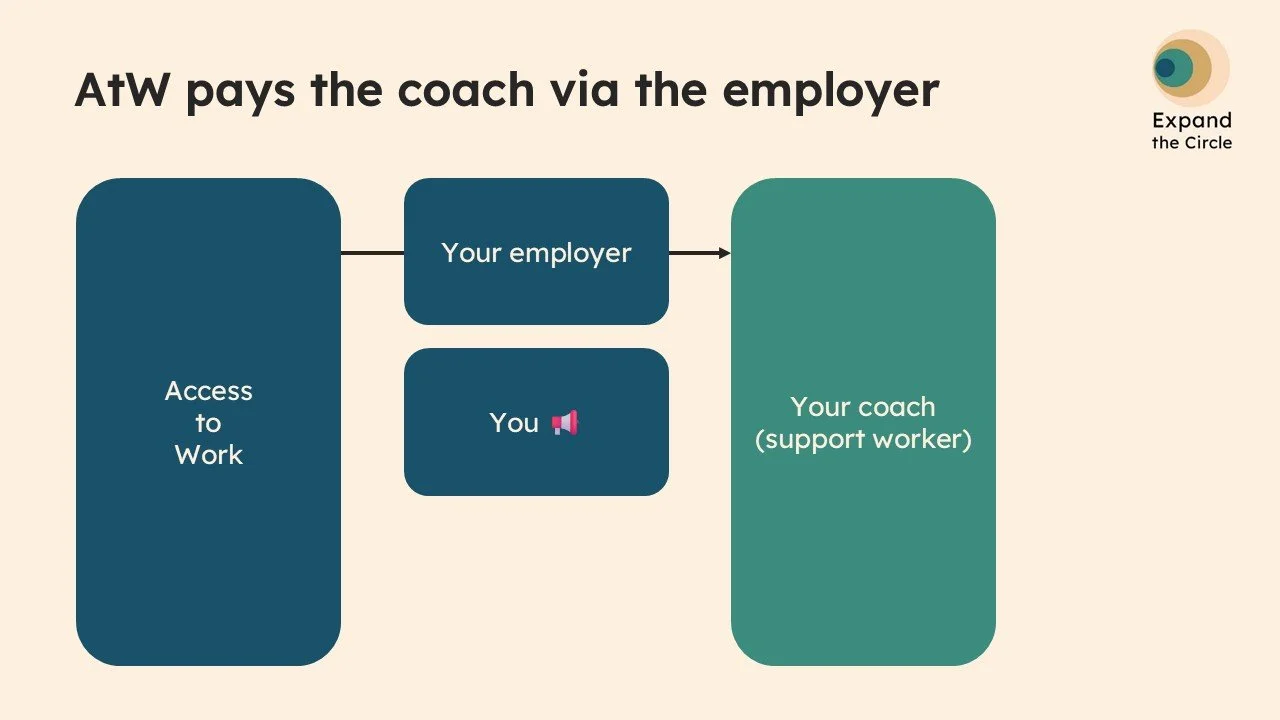
This shows that two payments need to be made (AtW to your employer, your employer to your coach).
If payment to the coach is contingent on your employer getting paid by AtW first, which might be likely if you work for a smaller employer, then you may need to act as a messenger between all three parties, which includes AtW and your coach as per option 1 above, but also in addition:
AtW and your employer (see the disadvantages for option 3 and replace coach with employer)
Your employer and your coach (to introduce them and you might also be added to the email chain if there are issues and payment delays)
NOTE: I’m actually not 100% sure if the text highlighted in peach reflects how the process actually works as I’ve never actually agreed to this option. Please let me know if you do know, I’d very much appreciate it.
Key takeaways
If you’d like to work with an independent practitioner like myself, be prepared to pay your coach and wait for AtW to pay you, as this will make the process much easier for everyone involved.
If you don’t think you can afford to pay your coach upfront, consider paying with a credit card or agreeing a payment plan.
Finally, if an independent coach agrees to waiting to be reimbursed by AtW, please make sure you that you get the claim submitted AND confirmed promptly.